
The Quartodecimanism Controversy and the Fight for Christian Unity
How an advocate for the regula fidei fought for what's in and out of bounds for Christians

The early church faced two major controversies in the second and third centuries.
One was about something called quartodecimanism. The other was related to gnosis, or wisdom. We’ll take a look at the first this week.
In both we’ll see how the regula fidei applies as a fundamental basis for the orthodox Christian faith.
What’s Quartodecimanism?
There was a single question behind the squabble over what came to be called “quartodecimanism.”
When should followers of Jesus celebrate Easter?
Here’s the background:
Jesus was arrested and crucified on the 14th day of the month of Nisan. It was the day before Passover (Pesach).
This was known as the day of Preparation, the Erev Pesach.1 This was the day the Passover lamb was slain for observant Jews. The same day the Lamb of God went to His death on the Cross.
It is the holiest and most important of all the Christian holidays for good reason.
It’s the consummation of mysterious words Jesus had said about Himself: the Son of Man who came “to give his life as a ransom for many.”
It’s the fulfillment of prophecy from the Hebrews Scriptures.
It is the embodied realization of religious tradition dating back to the Exodus.
The day mattered. The date mattered because it connected ancient practice to the event itself.
The Fourteenthers
One group of Christians thought the Easter celebration should always fall on that same calendar date: the 14th of Nisan.
These were the quartodecimans. The name comes from the Latin word for “fourteen.”2
These “fourteenthers” had clear support from the Gospel accounts:
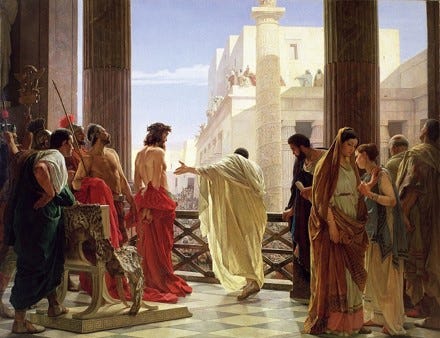
14 It was the day of Preparation of the Passover; it was about noon. “Here is your king,” Pilate said to the Jews.
15 But they shouted, “Take him away! Take him away! Crucify him!”… [John 19: 14 - 15]
And from the Hebrew Scriptures as well:
5 The Lord’s Passover begins at twilight on the fourteenth day of the first month. [Leviticus 23:5]
This was not a fringe practice.
Quartodecimanism was practiced by the majority of the Jewish Christians and was the standard throughout Asia Minor, Syria, and Jerusalem in the first and second centuries.
Polycarp was a fourteenther.
He was fierce defender of the faith, bishop of Smyrna, and honored martyr who went to his death by burning and stabbing for refusing to deny Christ. He is recognized as a saint in the Catholic Church, Orthodox Church (Eastern and Oriental), and Protestant traditions like Anglicanism and Lutheranism.
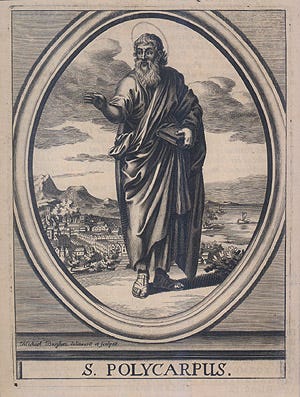
He claimed to have inherited the practice from his spiritual teacher, the Apostle John.
In the Other Corner…
On the other side of the quartodecimanism issue were the churches most closely connected with Rome.
The Roman tradition was to celebrate Easter on a rotating date based on the vernal equinox. The Easter date was the Sunday after the first full following the vernal equinox.3
There were good reasons for this practice as well.
Dating Easter based on the cycles of the moon might sound to modern ears like a uniquely pagan idea. But that’s not the case.
The Jewish ritual calendar was also influenced by the moon.
The Jewish dating is something called a lunisolar calendar. Months can be 29 or 30 days based on the cycles of the moon, and an extra month is added every few years so that, on average, the lunisolar years average out to be about the same as the solar calendar we’re used to.4
And by the first century, many in the Jesus movement had established Sunday as the day to meet for worship.5 It was the Lord’s Day, the day Jesus was resurrected. Celebrating Easter on the Lord’s Day seemed to make sense in light of this new tradition.
Further, it gave the Christian movement some separation from the Jewish faith that was increasingly hostile following the destruction of the Temple in 70 AD. To some Christians, it seemed wrong to rely on the ritual calendar of a faith that was openly cursing them.
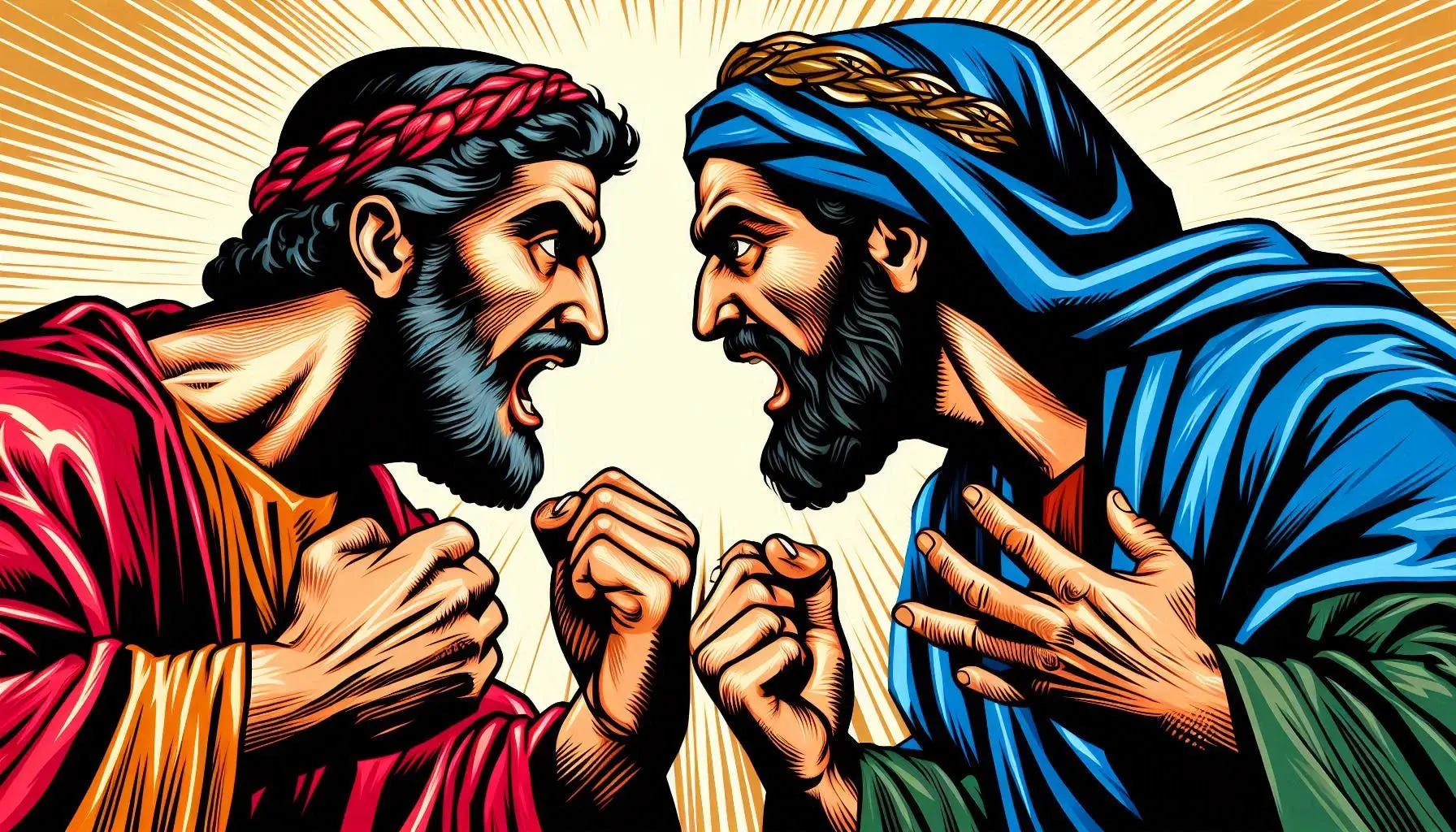
One example of the Jewish disdain for Christians is the Birkat haMinim. The name means the “Benediction of the Heretics.”
In practice, it’s a curse. And it’s targeted to the sect of the Nazarenes, the Christ followers. This curse was part of the daily prayer practice of 1st century religious Jews.
For the apostates (meshumaddim) let there be no hope,
and uproot the kingdom of arrogance (malkhut zadon), speedily and in our days.
May the Nazarenes (ha-naẓarim/noṣrim/notzrim) and the sectarians (minim) perish as in a moment… [Birkat haMinim, wikipedia.org]
Getting some separation by celebrating Easter on a Sunday seemed to make good sense.
How Was it Resolved?
The quartodecimanism dispute got worse before it eventually settled down.
In the late second century the bishop of Rome (aka, the person who came to be called the pope) took action. He requested bishops throughout the empire meet in councils (called “synods”) to discuss the issue.
Most agreed that Easter should be celebrated on Sunday.
They acknowledged that quartodecimanism took place through Asia Minor, but this was seen as a “local aberration.”6 An antiquated holdover from the Judaizing tendency that the Apostle Paul had railed against most famously in his epistle to the church in Galatia.
It is for freedom that Christ has set us free. Stand firm, then, and do not let yourselves be burdened again by a yoke of slavery. [Galatians 5:1]

The “yoke of slavery” was old ties to the performance-based religion. Jesus had fulfilled the Law. It was Jesus that mattered, not the date of Passover according to the anti-quartodecimans.
The Jesus followers throughout Asia Minor saw things differently.
They viewed an Easter celebration on Nisan 14 simply as being faithful to the sacred tradition that had been passed down to them.
A bishop of Ephesus named Polycrates sent a letter to Victor I, the bishop of Rome, to communicate why quartodecimanism was important to the churches of the East.
Fun fact: Victor I was the first African pope. He was ethnically Berber.7
As you can see below, he cited Apostolic tradition (naming Phillip and John as fourteenthers) and the ancient church tradition of saintly men and women.
He also claimed the collective sentiment of the Eastern bishops as justification for continuing to hold to Easter on Nisan 14.
As for us, then, we scrupulously observe the exact day, neither adding nor taking away... I speak of Philip, one of the twelve apostles, who is laid to rest at Hierapolis; and his two daughters, who arrived at old age unmarried…John, moreover, who reclined on the Lord’s bosom, and who became a priest wearing the mitre, and a witness and a teacher-he rests at Ephesus. Then there is Polycarp, both bishop and martyr at Smyrna; and Thraseas from Eumenia, both bishop and martyr, who rests at Smyrna.… These all kept the passover on the fourteenth. day of the month, in accordance with the Gospel, without ever deviating from it, but keeping to the rule of faith.
Moreover I also, Polycrates, who am the least of you all, in accordance with the tradition of my relatives, some of whom I have succeeded-seven of my relatives were bishops, and I am the eighth, and my relatives always observed the day when the people put away the leaven-I myself, brethren, I say, who am sixty-five years old in the Lord, and have fallen in with the brethren in all parts of the world, and have read through all Holy Scripture, am not frightened at the things which are said to terrify us. For those who are greater than I have said, “We ought to obey God rather than men.”...
I might also have made mention of the bishops associated with me, whom it was your own desire to have called together by me, and I called them together: whose names, if I were to write them down, would amount to a great number. These bishops, on coming to see me, unworthy as I am, signified their united approval of the letter, knowing that I wore these grey hairs not in vain, but have always regulated my conduct in obedience to the Lord Jesus. [Polycrates to Victor I, tertullian.org]
Victor responded swiftly.
He immediately moved to excommunicate bishop Polycrates.
Here’s how the early church historian Eusebius (260 - 339) records what happens.
Thereupon Victor, who presided over the church at Rome, immediately attempted to cut off from the common unity the parishes of all Asia, with the churches that agreed with them, as heterodox; and he wrote letters and declared all the brethren there wholly excommunicate. [Eusebius, The Church History, Chapter XXIV]
Excommunication was the ultimate spiritual censure. The excommunicated was (and is) cut off from the religious community and cannot participate in the Eucharist or other church rituals.
It would be the first time that the bishop of Rome would attempt a broad action against another group of professing believers.
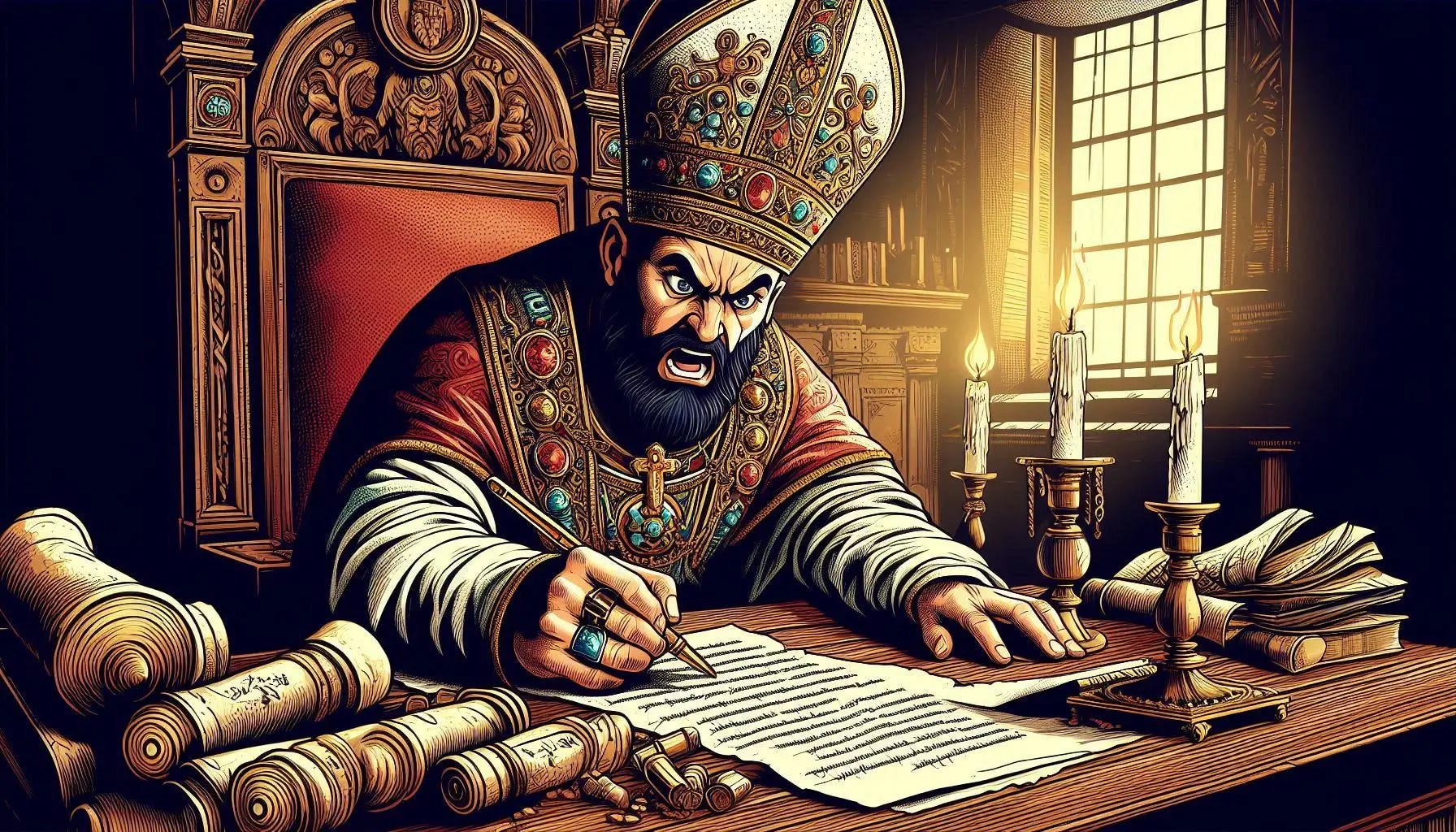
This would grow in frequency as a tool of papal authority and would spike in the High Middle Ages following the eventual Great Schism between East and West in 1054.
But Victor’s power was checked here.
And it was because other church leaders pushed back.
Even though they shared Victor’s conviction about Sunday Easter, they felt more strongly opposed to his extreme action to break off communion with Polycrates and the Eastern quartodecimans.
Among the objectors is Irenaeus, the same bishop who did so much to articulate and preserve the rule of faith.
Ireanaeus to the Rescue
Instead of schism, Irenaeus encouraged Victor I to focus on the big picture.
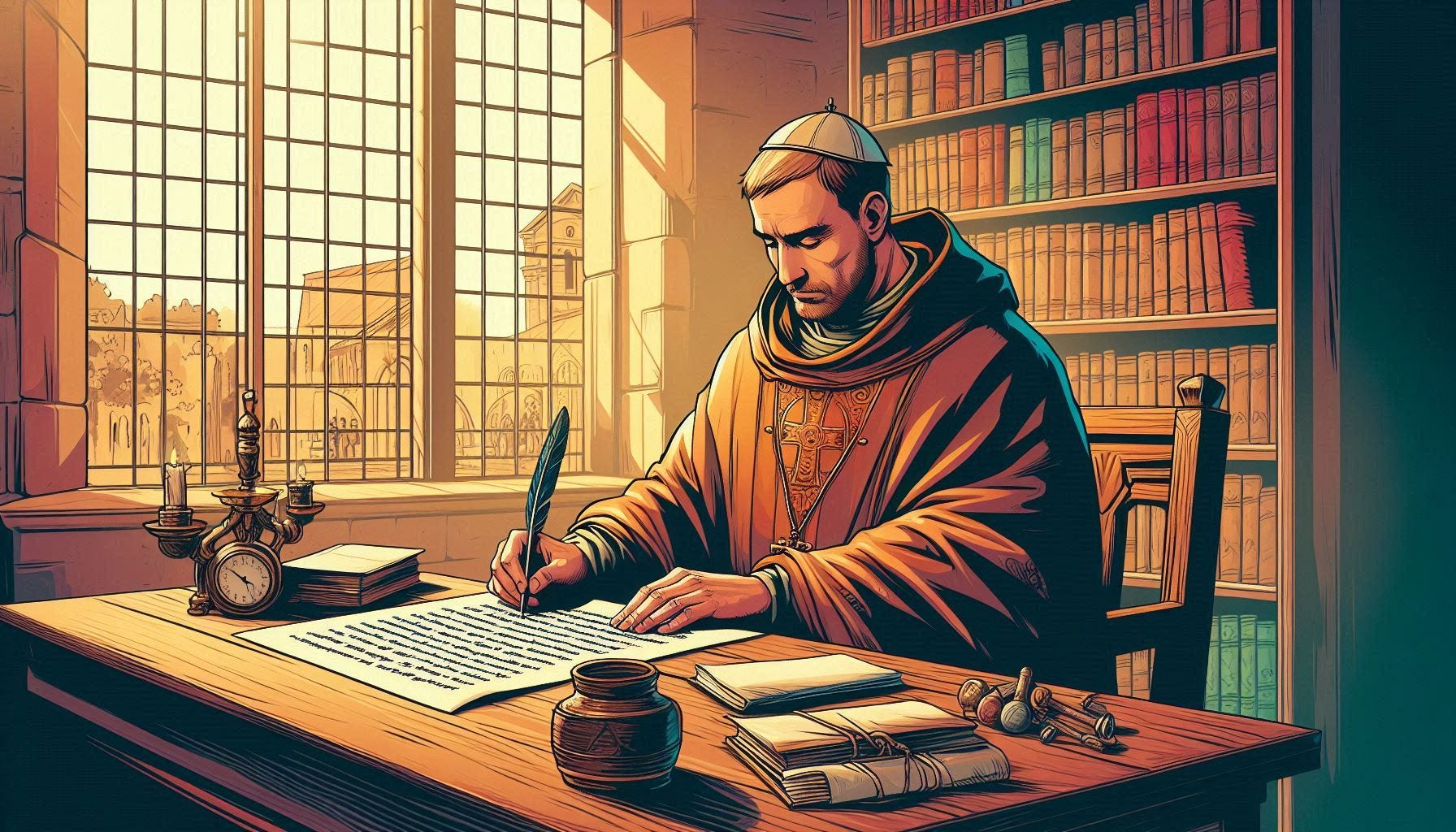
He urged him to realize that there are a number of small differences in the Christian tradition.
And he reminded the bishop of Rome that these differences had been around long before without any threat to peace and Christian unity.
Here’s Eusebius again, in recounting the rebuff Victor receives.
But this did not please all the bishops. And they besought him to consider the things of peace, and of neighborly unity and love. Words of theirs are extant, sharply rebuking Victor.
Among them was Irenaeus, who, sending letters in the name of the brethren in Gaul over whom he presided, maintained that the mystery of the resurrection of the Lord should be observed only on the Lord’s day. He fittingly admonishes Victor that he should not cut off whole churches of God which observed the tradition of an ancient custom and after many other words he proceeds as follows:
“For the controversy is not only concerning the day, but also concerning the very manner of the fast. For some think that they should fast one day, others two, yet others more; some, moreover, count their day as consisting of forty hours day and night.
And this variety in its observance has not originated in our time; but long before in that of our ancestors. It is likely that they did not hold to strict accuracy, and thus formed a custom for their posterity according to their own simplicity and peculiar mode. Yet all of these lived none the less in peace, and we also live in peace with one another; and the disagreement in regard to the fast confirms the agreement in the faith.” [Eusebius, The Church History, Chapter XXIV]
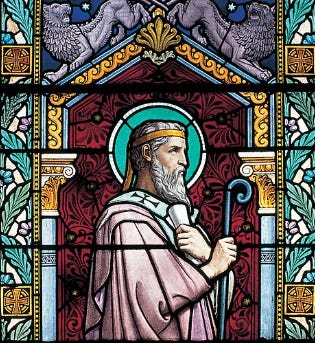

Irenaeus and his fellow like-minded bishops carried the day.
They spoke truth and wisdom to power. Victor, who indeed had a position of recognized authority as bishop of Rome, was forced to back down.
Irenaeus knew what Victor couldn’t see.
The date of Easter truly did matter. But it was not an essential of the Christian faith. It did not conflict with the regula fidei.
[Note: Even in the Hebrew Scriptures, Yahweh provides alternate arrangements for His people to celebrate Passover on separate days. See Numbers 9: 1 - 14 for the story. As always, God cares about the hearts of His people. Not their outward religious performance.]
The true center of the faith was articulated in Against Heresies which was written around 180 AD.8
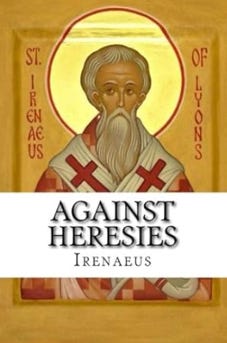
Here it is again:
…this faith: in one God, the Father Almighty, who made the heaven and the earth and the seas and all the things that are in them; and in one Christ Jesus, the Son of God, who was made flesh for our salvation; and in the Holy Spirit, who made known through the prophets the plan of salvation, and the coming, and the birth from a virgin, and the passion, and the resurrection from the dead, and the bodily ascension into heaven of the beloved Christ Jesus, our Lord, and his future appearing from heaven in the glory of the Father to sum up all things and to raise anew all flesh of the whole human race… [Irenaeus, Against Heresies, 1.X.1]
If we believe the rule of faith is what matters most, we can find there is room for charity in our differences. Even with something as important as the date of Easter, it is unity in Christ that matters most.
What Happened Next?
In the short term, Victor’s attempt to exert papal authority and forced compliance through excommunication went to nothing. The churches in Asia Minor were able to continue their regional practice.
This would change at the Council of Nicaea in 325, when the Roman date for Easter became the standard.
This was still a blow for the churches in Asia Minor, but it was a much different process than what Victor I had attempted. Rather than a unilateral papal decision, the Eastern bishops were active participants in the decisions made at Nicaea.
Following Nicaea, all Christian churches would celebrate Easter at the same time for the next 1250 years. That ended in 1582 when the Roman Catholic Church dropped the Julian calendar (which had been used since the time of Julius Caesar in 46 BC) and moved to the more accurate Gregorian calendar.

The Church of the East, by this time separate from the West following the 1054 Great Schism, maintained Easter based on Julian calendar dating.
East and West are still separate. Although, the different dating of Easter are a much smaller point of contention now than back in the second century.
This year, Easter will be April 12th for Eastern Churches and April 5th for those in the West.
Wrapping Up
Next week we’ll look at the other significant conflict in the early church: the debate over gnosis.
Did salvation come through something efficacious that happened on the Cross? Or was the path to salvation through Jesus sharing an enlightening divine knowledge that awakened a divine spark within?
The Gnostic thinkers believed the second.
We’ll look more at this fight and the role of the regula fidei next week.
*********
This article is part of a series unity in the body of Christ.
Part 1: Unity in the Body of Christ:
Part 2: 5 Ways to Pursue Unity in the Church
Part 3: The Regula Fidei and the Test of Christian Faith
Erev Pesach: https://www.chabad.org/holidays/passover/pesach_cdo/aid/1754/jewish/Erev-Pesach-The-Day-Before-Passover.htm
Quartodecimans: https://en.wikipedia.org/wiki/Quartodecimanism
Date of Easter: https://en.wikipedia.org/wiki/Date_of_Easter
Hebrew calendar: https://en.wikipedia.org/wiki/Hebrew_calendar
Lord’s Day: https://en.wikipedia.org/wiki/Lord%27s_Day
The Struggle for Apostolic Authority: The Easter Controversy in the Late Second Century: https://www.mdpi.com/2077-1444/15/4/494
Pope Victor I: https://en.wikipedia.org/wiki/Pope_Victor_I
Against Heresies: https://en.wikipedia.org/wiki/Against_Heresies_(Irenaeus)