
Unity in the Church: 5 Ways to Pursue It?
Proposing some Biblical principles to use as a scaffold towards growing unity in Christ

Last week we looked at the body of Christ—the varied collection of people from every tribe and nation who share a single-minded purpose to follow Jesus in loving others and bringing glory to God.
And we reviewed Jesus’s High Priestly Prayer where He prays earnestly for “complete unity” so that the world will know that He is truly the Son of God.
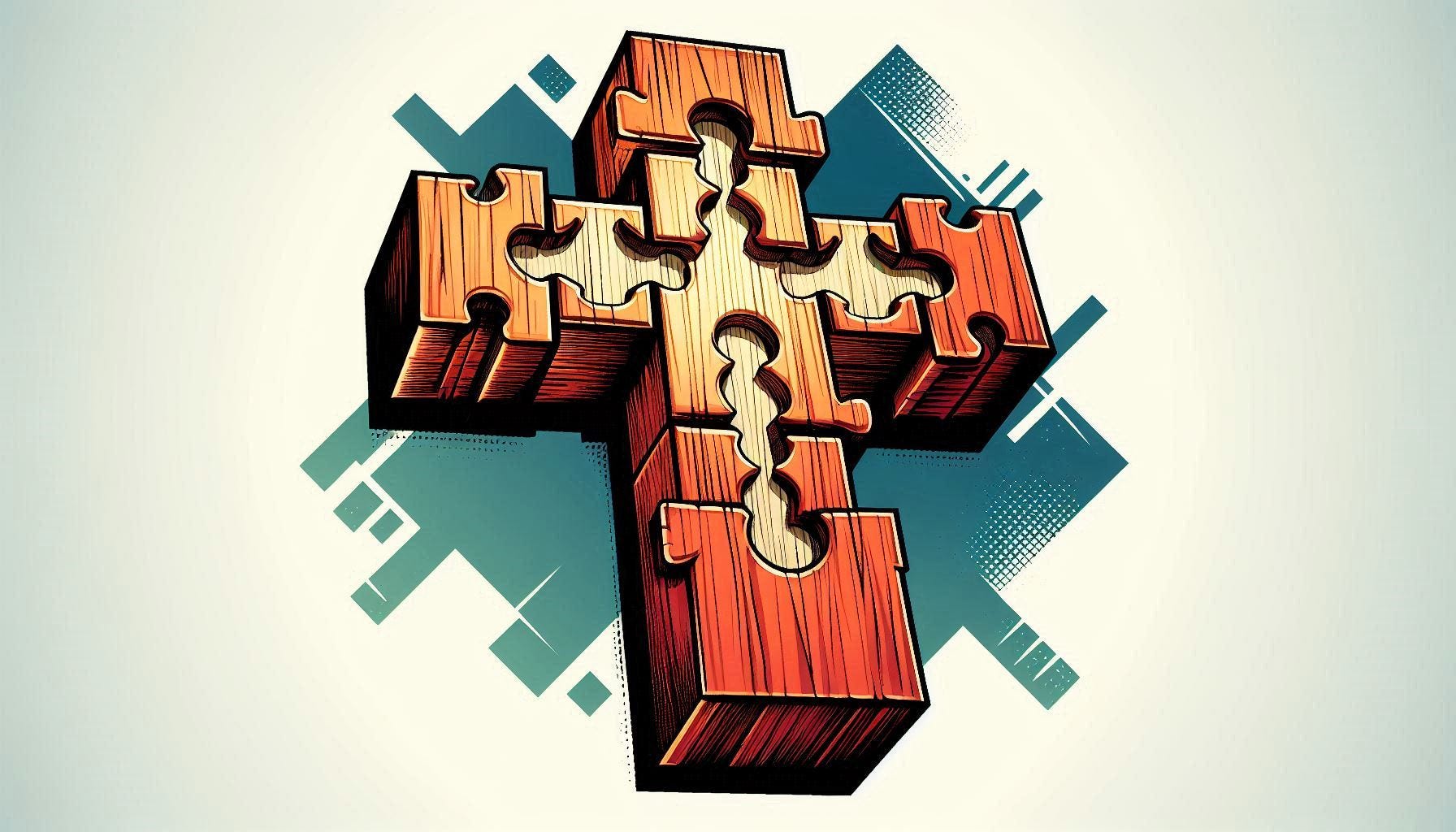
We also saw that in the body of visible believers today, something seems to be missing.
There is not complete unity.
How can there be when the Eastern Orthodox, Oriental Orthodox, and Roman Catholic Churches all earnestly believe they alone represent the One True Church? And when many streams of Protestantism functionally act in a similar manner with claims of superior doctrine?
What can be done?
Here are 5 general propositions as a starting point to the conversation.
Getting Started
On their own, each of these are insufficient for cultivating a vital body of believers that worships our God in spirit and truth.
And all of them require balance. There’s a ditch waiting on the other side if any single one is pursued with greater vigor than others.
The first one is simple, but critical: wrestling with whether unity truly matters.
(1) Decide for Yourself If It’s Important
If you’re not open to believing that unity in the Church is truly important, it’s probably not all that useful to move on to the other four thoughts here.
So in today’s article, we’ll spend most our time on this first proposition and then do a cursory review of the other four.
Here are three reasons that unity in the Church is perhaps more important than you’ve previously thought.
Three reasons that help us understand why Jesus prayed as He did in His High Priestly Prayer.
First Reason: We are the Temple
The Temple was the focus of the Jewish faith and religious life.
Solomon built the first Temple in the 10th century BC and it stood for 400 years until it was destroyed by the Babylonians under Nebuchadnezzar in the 6th century BC.1
The Second Temple was built around 518 BC after the Persians, under Cyrus, allowed the Jews to return from exile and rebuild Jerusalem.2
The Second Temple became known as Herod’s Temple, following extensive renovations under Herod the Great in the late first century BC. It remained the focus of Jewish religious life for nearly 600 years.
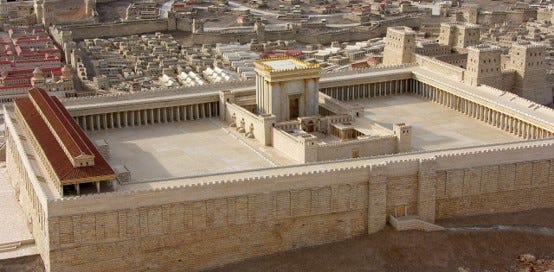
Suffice it to say, the Temple was essential.
The same way that the Tabernacle had been when the Israelites dwelt in tents between the time of the Exodus and the construction of Solomon’s Temple.
It was where man could encounter Yahweh through the divine mystery of heaven touching earth. It was Yahweh’s dwelling place.
The Second Temple was destroyed by the Romans in 70 AD3, but Paul tells us there is a new Temple.
It’s you and me.
In his letter to the church at Ephesus, Paul is advocating for unity between Jew and Gentile believers.
He reminds the church of their true identity: they are members of a single mystical Temple for God founded on Christ.
19 Consequently, you are no longer foreigners and strangers, but fellow citizens with God’s people and also members of his household, 20 built on the foundation of the apostles and prophets, with Christ Jesus himself as the chief cornerstone. 21 In him the whole building is joined together and rises to become a holy temple in the Lord. 22 And in him you too are being built together to become a dwelling in which God lives by his Spirit. [Ephesians 2: 19 - 22]
He writes about the same theme in 2 Corinthians 6:16, when he reminds the Corinthians believers, “we are the temple of the living God.”4
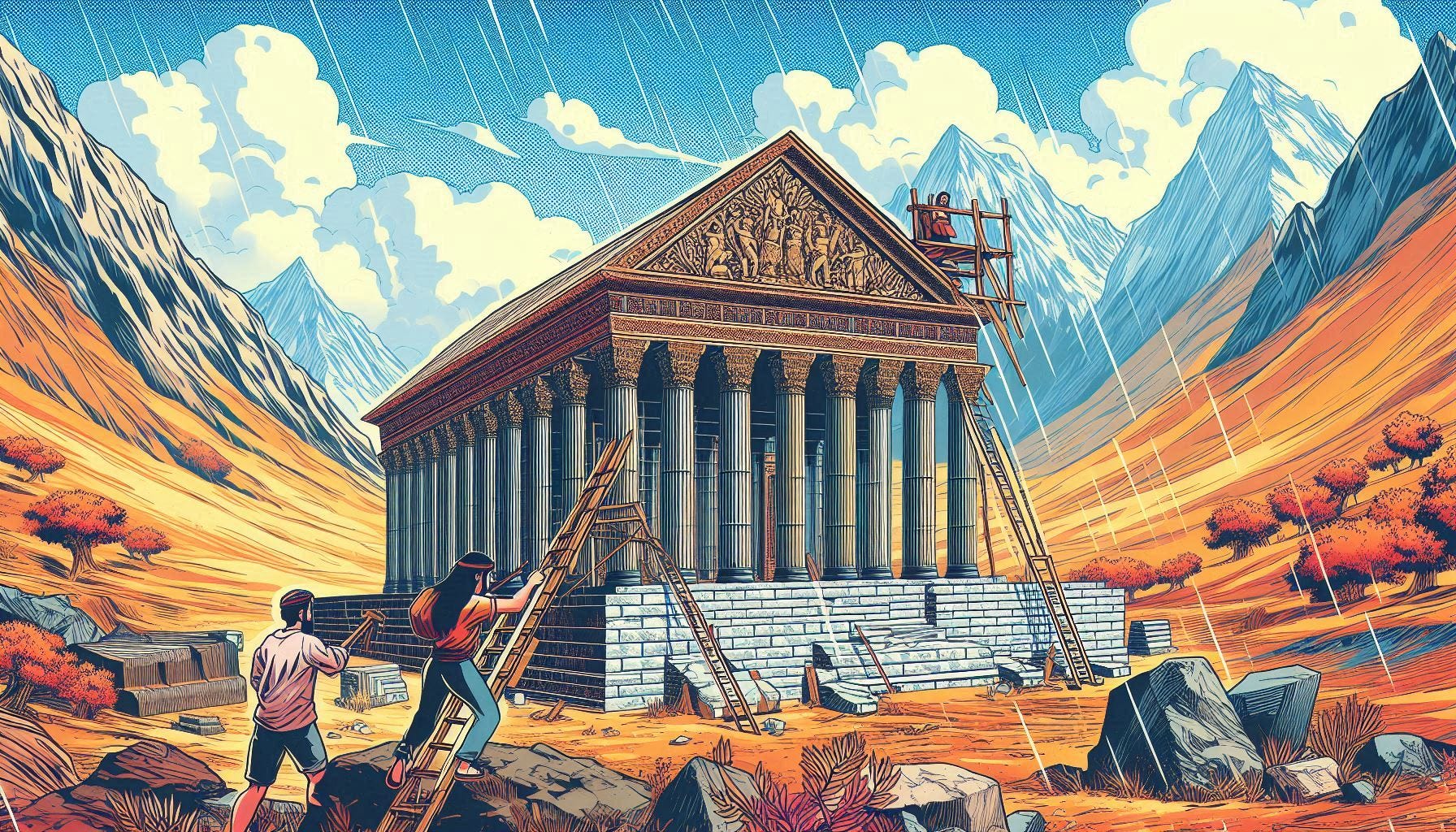
This is a mind blowing claim.
The fact that God literally dwells within us is something that Catholics, Orthodox, and Protestants all say we believe.
And if we believe that, how do we imagine God considers His holy abode? How should we consider our posture towards others who are fellow parts of this Temple?
Second Reason: Unity in the Church Brings Glory to God
Catholic bishop and Church Father Augustine of Hippo (354 - 430) was a Catholic bishop and one of the most influential Christian thinkers of all time. And he’s not only respected in the Roman Catholic tradition.
He’s venerated as a saint in the Eastern and Oriental Orthodox Churches.
Protestant thinkers like Luther and Calvin leaned on him more than any other Church Father.
In fact, one of the most famous portions of the Westminster Shorter Catechism (a summary of the Reformed tradition) draws heavily from his writings.
It answers the question we’ve all asked at one point or another: what is the meaning of life?
It pulls from Augustine in giving the answer:
Man’s chief end is to glorify God, and to enjoy Him forever.5
Our purpose is to bring glory to God. And unity in the Church brings glory to God.
5 May the God who gives endurance and encouragement give you the same attitude of mind toward each other that Christ Jesus had, 6 so that with one mind and one voice you may glorify the God and Father of our Lord Jesus Christ. [Romans 15: 5–6]
Third Reason: Unity in the Church is a Witness for the Truth of Christ
There’s a a third reason God cares about unity amongst His body of believers:
It’s a powerful witness to the world about the truth of His Gospel.
In a fractured and divided world that runs on pride, ambition, and control, a movement of humble and united Christ followers is shockingly different.
It’s a countercultural witness to the truth of Christ’s Gospel message.

This is what Jesus calls all of His followers to. To be His witnesses here on earth and to make disciples who will join in following Him as well.
19 Therefore go and make disciples of all nations, baptizing them in the name of the Father and of the Son and of the Holy Spirit, 20 and teaching them to obey everything I have commanded you… [Mathew 28:19]
The Potential Risk
If we’re exclusively focused on the necessity of unity in the Church, there’s a danger that we compromise on essential doctrine that would undermine the Gospel truth of Christ.
That’s the key risk of ecumenism: essential convictions are improperly softened to the detriment of Truth.
If we focus more on what we have in common, is there enough solid doctrine to build on?
I believe there’s enough that allows us to rightly protect the faith while also allowing for generous charity in doctrinal differences. Let’s see what you think.
(2) Clarify (and Emphasize) what We Share
Moving towards greater unity requires an understanding where unity actually exists already.
So, how can we clarify the fundamentals of what all orthodox believers so we can articulate a shared foundation of Truth?
I propose Christians can take a step forward by looking back.
The first Christians had a common “rule of faith” that they expressed in baptismal vows when they publicly identified with Christ.
This regula fidei dealt with the Trinitarian nature of God expressed in His three persons.
One version is expressed below. It’s from Irenaeus, a “spiritual grandson” of John the Evangelist, and a vigorous defender of the Christian faith.
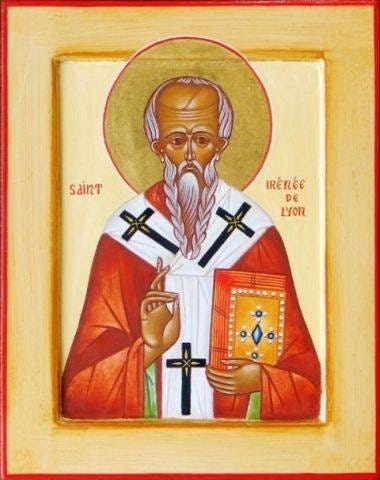

He’s writing here in The Demonstration of the Apostolic Preaching in the late 2nd century.
This then is the order of the rule of our faith…: God, the Father, not made, not material, invisible; one God, the creator of all things: this is the first point of our faith. The second point is: The Word of God, Son of God, Christ Jesus our Lord, who was manifested to the prophets according to the form of their prophesying and according to the method of the dispensation of the Father through whom all things were made; who also at the end of the times, to complete and gather up all things, was made man among men, visible and tangible, in order to abolish death and show forth life and produce a community of union between God and man. And the third point is: The Holy Spirit, through whom the prophets prophesied, and the fathers learned the things of God, and the righteous were led forth into the way of righteousness; and who in the end of the times was poured out in a new way a upon mankind in all the earth, renewing man unto God. [ Irenaeus, The Demonstration of the Apostolic Preaching]
This isn’t a fully developed articulation of all matters in the Christian faith. But does it cover the absolute essentials of what it means to believe in Jesus?
We know that it did for the earliest followers of Jesus, who also wrestled with their own disagreements. I believe it still does today as well.
The Risk
If we focus overmuch on these essential, but relatively limited, places of commonality what could happen to the distinctives of the various Christian traditions?
We’d need a framework where Jesus followers from the Orthodox, Catholic, and Protestant traditions can both celebrate these shared convictions while also still being fully convinced of what they uniquely believe.
That’s hard, but I think it’s possible. Especially if we do the following:
(3) Learn to Honor Each Other
It’s hard to focus exclusively on differences if we’re busy encouraging and building each other up. Today, most conversations about doctrinal differences amongst Christians tend to focus on advocating for our preferred beliefs.
What if took the opposite approach and learned what’s admirable within the beliefs of brothers and sisters with whom we disagree?

Living into a life of encouragement is what the Apostle Paul exhorted his church plants throughout the Roman world to do.
This is how he charged the early Christians to live in Romans:
9 Love must be sincere. Hate what is evil; cling to what is good. 10 Be devoted to one another in love. Honor one another above yourselves. [Romans 12: 9–10]
And in his first letter to the church at Thessalonica:
11 Therefore encourage one another and build each other up, just as in fact you are doing. [1 Thessalonians 5:11]
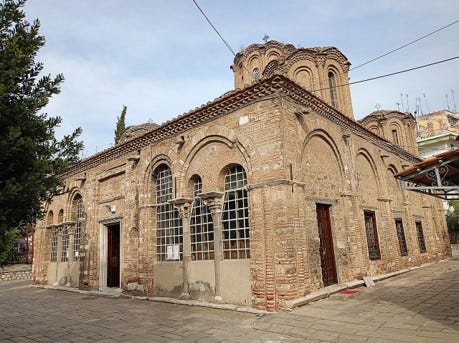
When we look for the good and admirable distinctives of different Christian traditions, we find there is a lot to celebrate.
Just a few examples:
The Oriental Orthodox Church offers a tradition that is still connected to Aramaic, the language of Jesus and His disciples. It preserves an unbroken link to the early Church of Antioch and still uses the ancient Liturgy of Saint James.
The Eastern Orthodox Church has a beautiful and immersive worship experience that is deeply connected to the ancient practices of Jesus followers. Orthodox believers maintain a focus on the ongoing pursuit of life in Christ, providing structure and support in the path of sanctification that isn’t always celebrated in the same way in other traditions.
The Roman Catholic Church has rich sacramental theology and emphasizes the life of prayer of believers. Many of the greatest Christian theologians and thinkers were Catholic, including those who have profoundly influenced the later Protestant movement. Additionally, the Church is the world’s largest non-government provider of health and education services, running over 5,000 hospitals and 18,000 clinics worldwide.6
The Protestant movement made church services and the Bible accessible to everyday people. Not only did this encourage a direct relationship between God and His people, but helped spread literacy throughout Europe and paved the way for much of democratic thinking. Further, it spurred the Roman Catholic Church to initiate its own reforms which were a catalyst for spiritual renewal.7
Building each other up can be hard work.
Especially when we have legitimate differences with fellow brothers and sisters in Christ and truly desire that they come to see the value of our own distinctive position. It takes deep humility and humility is rarely (never?) fun.
But it’s also essential work.
At least, it’s essential if we desire to follow the example of our Savior and Lord who showed what it means to live this way.
(4) Serve Others and Humble Ourselves
Jesus responded in a very distinctive way after hearing His disciplines argue over who was the greatest in His Kingdom.
Peter, we know, was horrified by Jesus humbling Himself in this way.
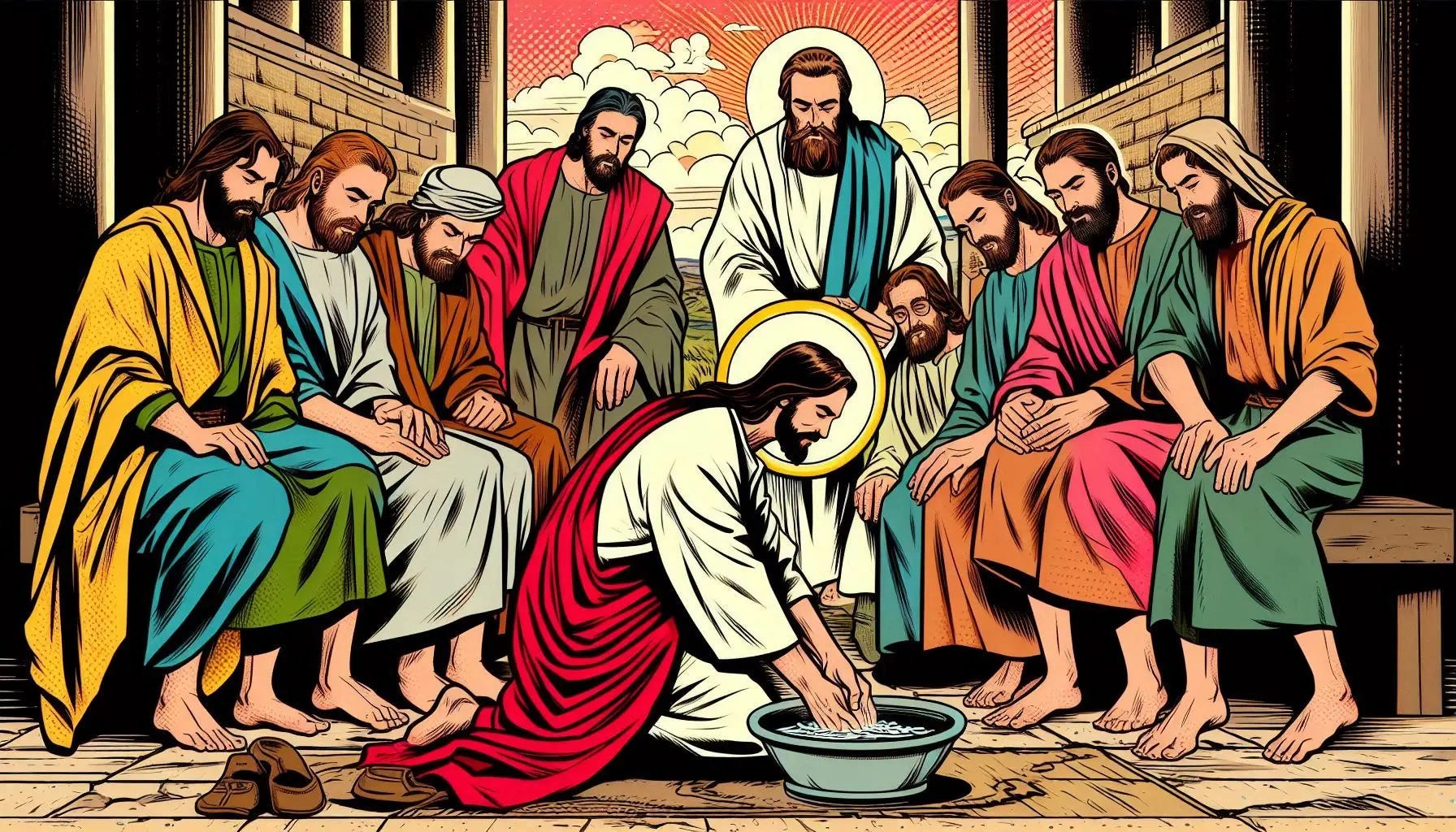
How could the Messiah lower Himself this way and wash the feet of his disciples?!
It bothered Peter so much that he tried to escape the foot washing. Jesus though, wouldn’t let him.
The lesson was essential. This is what it means to lead in Christ’s Kingdom. To have the mindset of a servant.
It’s when we serve others in humility and love we can cultivate hearts that honor the good we see in each other instead of only leading with critique.
Encouraging and serving others is the very thing Jesus called His followers to, second only to loving God.⁶
Paul reminds the church in Galatia how essential it is:
13 You, my brothers and sisters, were called to be free. But do not use your freedom to indulge the flesh; rather, serve one another humbly in love. 14 For the entire law is fulfilled in keeping this one command: “Love your neighbor as yourself.” [Galatians 5: 13–14]
When we combine a commitment to right beliefs (orthodoxy) and right action (orthopraxy) in this manner, followers of Christ put our money where our mouth is.
And that’s exactly what our true enemy fears.
(5) Recognize the Real Enemy
All Christians (and all humans, for that matter) have a common enemy.
There is malevolent spiritual evil that often masquerades as light, but seeks to kill and destroy.
The real enemy is not a fellow human being and certainly not a Jesus follower of a different denomination or nationality.

We shouldn’t be distracted and divided by the enemy of mankind.
The enemy whose very name means “the adversary.” The one who Jesus told us seeks to kill and destroy.
10 The thief comes only to steal and kill and destroy; I have come that they may have life, and have it to the full. [John 10:10]
Acknowledging that satan is real and active doesn’t mean having an unhealthy focus on him. We want to honor God.
And we can honor God by realizing the reality of satan and learning to reject the schemes that he would have us fall victim to.
Rejecting satan means working to heal divisions within the body. To repent quickly of our sins and forgive even faster.
10 Anyone you forgive, I also forgive. And what I have forgiven—if there was anything to forgive—I have forgiven in the sight of Christ for your sake, 11 in order that Satan might not outwit us. For we are not unaware of his schemes. [2 Corinthians 2: 10 - 11]

This spiritual reality hit home in a new way for me when I saw firsthand evidence of a satanist who masquerades as a Christian.
His purpose? To secretly work to inflame divisions between different Christian faith traditions.
I was surprised, but should not have been.
This is exactly what satan wants: a divided, and weak church too distracted by petty squabbles to realize who the enemy truly is.
It’s time followers of Christ wake up: the hard work of promoting unity in the Church is spiritual warfare.
Wrapping Up: The Supreme Head of Our Body
Jesus, through the power of the Holy Spirit, is the supernatural glue that holds His Church together.
As Paul writes in Colossians, He is the head and is supreme above all.
He is before all things, and in him all things hold together. 18 And he is the head of the body, the church; he is the beginning and the firstborn from among the dead, so that in everything he might have the supremacy. [Colossians 1: 17–18]
You may truly believe that your particular expression of the faith is the One True Church. There’s a good chance you believe this. You’ve thought about and you’ve chosen it for a reason, after all.
You may be convinced that it alone has the fullness of the deposit of faith or the most accurate understanding of the Gospel. You may earnestly desire that others - both non-Christians and Christians - come to see the beauty and truth in your church. Because you sincerely believe your expression of faith is the truest and best way to serve God and follow Jesus.
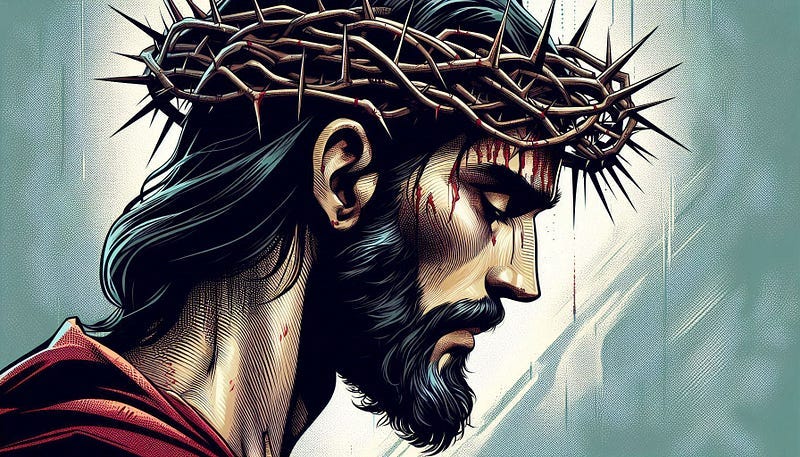
You can do this. And most of us, in one way or another, do actually do this.
But what you may not do, as a follower of Christ, is claim your particular church is supreme over Jesus. He is before all things and He is the head of the Church.
And He will have supremacy in all things.
********************
This is part of a series on Christian unity
Last week: Unity in the Body of Christ?
Next week: The regula fidei and our core convictions
********************
Solomon’s Temple: https://en.wikipedia.org/wiki/Solomon%27s_Temple
Second Temple: https://en.wikipedia.org/wiki/Second_Temple
ibid
16 What agreement is there between the temple of God and idols? For we are the temple of the living God. As God has said:
“I will live with them
and walk among them,
and I will be their God,
and they will be my people.” [2 Corinthians 6:16]
Westminster Shorter Catechism: https://www.cambridgepres.org.uk/resources/app/type/westminster-shorter-catechism/resource/405/title/q1
Drawing on Scripture like 1 Corinthians 10:31, Psalm 73: 24 - 26, and John 17:22
Catholic Church and health care: https://en.wikipedia.org/wiki/Catholic_Church_and_health_care
Counter Reformation: https://www.britannica.com/event/Counter-Reformation
I appreciate the reminder to focus on what we have in common, rather than our differences. Humility & service..no matter the denomination..they will know us by our love!
Very well said. Lots to think about!